

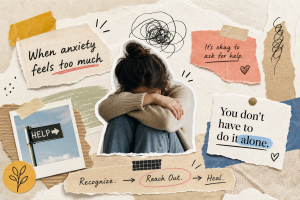
 Perhaps you’ve been looking for an answer for a while…why you feel the way you do? and one day you landed on an article about anxiety symptoms, or someone spoke about their own issues, and suddenly it all makes sense.
That constant unsettled feeling, the chest pain, the nagging ache in your head, the jumpy feeling when something new or unexpected happens, the unease around events, settings or people that didn’t bother you before. Maybe you’ve seen your doctor and they’ve taken blood tests which have come back normal. You just know there’s something not right…and now you know!
Anxiety doesn’t always announce itself with a racing mind and visible distress. It can look like physical symptoms, a tummy issue, a heart flutter, or constant tiredness, long before the emotional picture becomes clear. Because of that, some people spend months chasing physical explanations before realising what’s actually going on. This article is here to shorten that gap. By the end of it, you’ll have a clear picture of what anxiety looks and feels like, how to know when it’s crossed into clinical territory, and what to actually do about it.
What anxiety does to your body: the physical symptoms people often miss, from poor sleep to panic attacks
Your brain doesn’t differentiate between a real or imagined threat, it just fires up the fight-or-flight response. Adrenaline surges, your heart rate climbs, blood is diverted away from digestion and toward your muscles. This is the system that kept your ancestors alive millions of years ago.
The problem is that your nervous system can’t tell the difference between a T-rex and this afternoon’s meeting, so it creates physical symptoms that feel alarming and completely real.
Heart palpitations, breathlessness, and dizziness
Heart palpitations are among the most frequently reported signs of anxiety, and they are one of the most frightening. That fluttering, racing, or pounding sensation in your chest is often your heart responding to adrenaline rather than a sign of underlying cardiac disease, though persistent, severe, or recurring palpitations should always be assessed by a doctor to rule out any heart-related cause.
Shortness of breath often follows, and here’s the part that catches people off guard: when you breathe too fast or too shallowly in response to anxiety, you reduce the carbon dioxide in your blood, and that directly causes dizziness and lightheadedness. One symptom feeds into the next, and what started as a quickened pulse can spiral into a full-blown panic within minutes
Gut feelings are real
The gut and the brain are in constant communication through what researchers call the gut-brain axis, which is why anxiety and worry can so easily produce nausea, stomach cramps, bloating, and diarrhoea. If you’ve ever felt sick with nerves before an important event, you’ve experienced this connection firsthand.
For some people with chronic anxiety, that gut distress doesn’t go away after the nerve-wracking moment passes. Long-term anxiety is associated with an increased risk of developing irritable bowel syndrome, and many people seeking treatment for IBS later discover anxiety is a major cause.
Sexual problems also radiate from anxiety: After all, if you’re feeling worried, unhappy and constantly unsettled, how are you going to be comfortable in your own skin?
Tension headaches, muscle tightness, and fatigue
Persistent muscle tension is one of the most under-recognised physical symptoms of an anxiety disorder, partly because it builds so gradually that it starts to feel normal. Your shoulders creep up toward your ears. Your jaw stays clenched. Your neck and upper back stay braced as though you’re permanently waiting for something bad to happen. Tension headaches follow, and the constant physical effort of being “on alert” produces a fatigue that sleep doesn’t seem to fix. If you’ve been attributing all of this to overwork, you’re not wrong exactly, but you may be only halfway to the real answer.
Recognising common anxiety symptoms: the emotional and cognitive signs
Once you move past the physical experience, how anxiety actually feels from the inside is just as distinctive. For many people, the emotional symptoms are the hardest to name, partly because they’ve been present for so long that they no longer seem unusual.
Excessive worry and the feeling of dread
At the core of most anxiety disorders is worry that feels impossible to switch off. Not the productive kind of concern that leads you to act on something and move on, but a persistent, low-level dread that hovers regardless of what’s actually happening in your life. This worry is out of proportion to what’s actually happening, which is one of the things that makes it so disorienting: you know, rationally, that things are probably fine, or will be fine, you just can’t shake the feeling
Restlessness, irritability, and concentration problems
Irritability is one of the most commonly overlooked emotional signs of anxiety, because it tends to get labelled as a mood or personality issue rather than a symptom. If you’ve been snapping at people you care about and can’t explain why, anxiety is worth considering. Restlessness, a difficulty sitting still or settling on anything, and problems concentrating are also recognised criteria for generalised anxiety disorder. Your mind is too busy scanning for threats to focus on the task in front of you.
Brooding, overthinking and the loop you can’t switch off
Brooding is the mental equivalent of circling a roundabout over and over, without being able to take an exit. You replay conversations, rehearse worst-case scenarios, and revisit decisions you’ve already made. This is different from problem-solving, where thinking leads to action. With brooding and rumination, the thinking is the trap. It is exhausting in a way that’s hard to describe to someone who hasn’t experienced it, and it tends to be worst at night when there are fewer distractions to compete with it.
How anxiety symptoms differ depending on the type
Not all anxiety presents the same way, and knowing the differences matters because it shapes which type of support will help you most. Misidentifying the type is, in fact, one of the most common reasons people stay stuck, seeking help for the wrong thing, or not seeking it at all because the pattern doesn’t match what they expected anxiety to look like.
Generalised anxiety disorder, or GAD, is characterised by ongoing, wide-ranging worry that touches multiple areas of life: work, health, finances, relationships. The physical symptoms, including muscle tension, fatigue, and sleep disturbance, tend to be persistent rather than off and on.
Panic disorder looks quite different. It centres on sudden, intense panic attacks that peak within minutes and arrive with dramatic physical symptoms: chest pain, numbness or tingling, shortness of breath, and an overwhelming sense of losing control, or even that you might die. With panic disorder, anxiety will shift towards fear of the next attack, so you avoid situations, locations and even people. This avoidance behaviour slowly shrinks a person’s world and abilities.
Social anxiety disorder and specific phobias
Social anxiety disorder is rooted in fear of judgment, embarrassment, and negative evaluation by others. It tends to be situational, building in anticipation of social events or performance situations, and subsiding when those situations are avoided.
Specific phobias work differently again: the fear is acute, narrowly focused on a particular object or situation (heights, dogs, flying etc), and largely absent the rest of the time. All four types share some physical overlap, but their triggers and timelines are distinct. Getting clarity on which pattern fits your experience is the first step toward finding the right path forward.
When worry becomes a disorder: recognising the threshold
Stress and worry are part of being human. The question worth asking is not whether you feel anxious sometimes, but whether anxiety has started running your life. Understanding where everyday worry ends and a clinical pattern begins makes it much easier to take the right next step.
The six-month rule and the symptom count
Mental health practice suggests that anxiety crosses into generalised anxiety disorder territory when worry occurs on most days for at least six months, and when it comes with three or more of the following: restlessness, fatigue, concentration difficulty, irritability, muscle tension, or disrupted sleep. The threshold is about persistence and pattern, not a single bad week. What the six-month marker is really telling you is that this isn’t a response to a temporary stressor. It’s a settled state, and settled states respond well to treatment.
When anxiety starts running your life
The impairment marker is the other key piece of this picture. When anxiety starts making your decisions for you, steering you away from social events, affecting your performance at work, or making even small choices feel overwhelming, it has moved into clinical territory.
Anxiety warning signs that need immediate or urgent attention
Most anxiety symptoms are deeply unpleasant without being dangerous. But there are situations where you need to stop reading and get help right now, and it’s worth knowing clearly what those look like.
When to go to the A&E
Go to A&E, or call 999 in the UK, if you experience chest pain that radiates to your arm or jaw, a sudden severe headache unlike anything you’ve had before, one-sided weakness or facial drooping, slurred speech, or difficulty breathing that doesn’t ease. These symptoms overlap with anxiety but can also signal a heart attack, stroke, or other medical emergency.
Suicidal thoughts also require immediate support: in the UK, you can call the Samaritans on 116 123 any time.
When to see a doctor or therapist soon
The larger category of symptoms, the ones that don’t require an ambulance but absolutely shouldn’t be left to manage alone, includes persistent anxiety affecting sleep, daily life or work for months, recurring panic attacks, physical symptoms that have been medically cleared but keep returning, and increasing reliance on avoidance to get through the day. This is the territory where professional therapy makes the most meaningful difference. You don’t need to be in crisis to deserve support. You just need to recognise that what you’re managing has gone beyond what self-help can reach.
Managing anxiety symptoms: what to do once you recognise them
Recognition is the beginning, not the end. Once you’ve identified what you’re dealing with, there are clear, practical steps that move you from awareness toward actual change.
Start with honest self-assessment
Write down the symptoms you’ve been experiencing. Note how long they’ve been present and how they’re affecting your daily life. This isn’t a diagnosis; it’s a map. Having that information written down before you speak to a professional means your conversation starts somewhere useful rather than vague. It also has a way of making the problem feel less shapeless and overwhelming once it’s on paper.
Talk to a professional sooner than you think you need to
The most common thing people say after starting therapy for anxiety is that they wished they’d done it sooner. Anxiety tends to compound when it goes unaddressed, building avoidance patterns and physical habits that take longer to undo the longer they’ve been in place. When it comes to drug-free treatment options, the Talking Therapies (psychotherapy, CBT etc) are seen as the most effective for anxiety disorders.
EMDR has strong evidence particularly for trauma-related anxiety.
Hypnotherapy has a more limited evidence base and is generally considered a complementary approach rather than a standalone treatment, though some people find it helpful as part of a broader programme. A qualified therapist can help you work out which approach, or combination of approaches, is right for your situation.
If you’re looking for a starting point, Lutterworth Health is a hypnotherapy and psychotherapy clinic offering focused support for anxiety. Sue Rayner works with both adults and children, (7 years +) and offers flexible appointments including evenings and online sessions. If you are specifically concerned about younger family members, see anxiety in children for guidance on when to seek help.
You already know something is off. That’s worth listening to
The racing heart, the churning stomach, the worry that follows you into sleep and greets you when you wake. These aren’t signs of weakness, and they’re not things you simply have to live with. They are your body’s way of signalling that something needs attention, and recognising that signal is the most important thing you can do.
Anxiety symptoms show up in the body and the mind. They follow recognisable patterns. And they respond well to the right support, often faster than people expect. If what you’ve read here feels familiar, the physical signs, the anxiousness, the checklist of emotional and cognitive patterns, the sense that worry has taken on a life of its own, that recognition is worth acting on. Write down what you’ve noticed and reach out to an experienced therapist who can help you understand what’s happening and what comes next. The help is there. It’s closer than you think.
Call Sue today on 07500 907 428 or message Sue@LutterworthHealth.co.uk
Book a Free Screening Session, in person or online. Even a phone call or text will make you feel better, more in control and ready to change your life for the better
For more posts and resources on anxiety, browse anxiety tag.